How to Check Predicted Lineups Before Kick-off
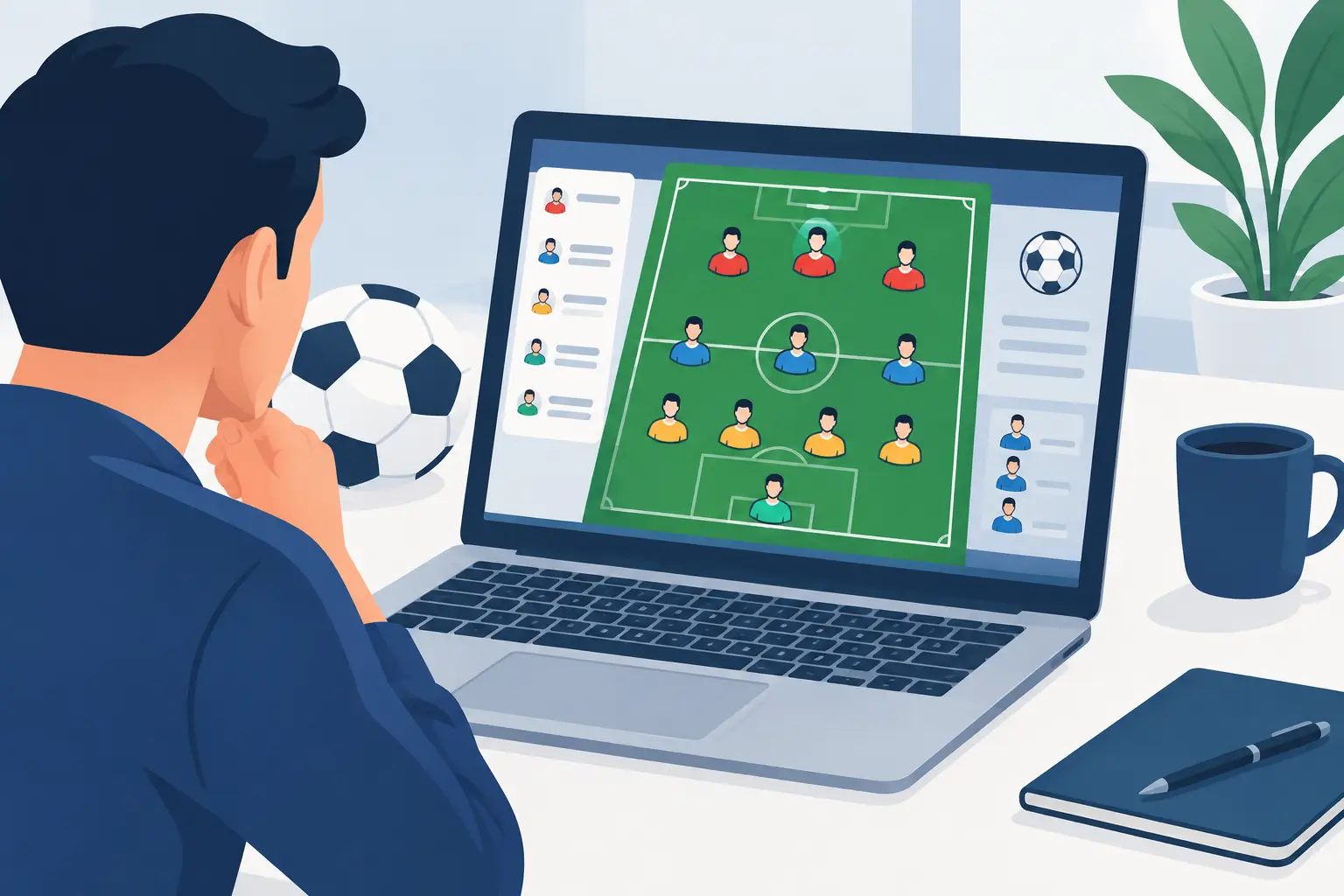
A striker marked doubtful on Friday can be leading the line on Saturday. A popular fantasy pick can be rested without warning. That is why fans who check predicted lineups get more from the build-up, but only when they treat an expected XI as useful match context rather than a final team sheet.
Predicted lineups are one of the quickest ways to understand how a match may unfold. They can flag a changed formation, show where a side is short on numbers and reveal which players are likely to take on bigger roles. For supporters, fantasy managers and anyone following the action closely, the key is knowing what the prediction is based on, how fresh it is and when confirmed news will replace it.
What predicted lineups can tell you
A predicted lineup is an informed estimate of the starting XI before official teams are announced. It usually draws on recent selections, injuries, suspensions, press-conference comments, fixture congestion and tactical patterns. It is not a leak, and it is not a guarantee.
Used properly, it gives you an early read on the match. If a club has played three times in eight days, a prediction may point towards rotation. If a first-choice full-back is absent, it can show whether the manager is likely to use a natural replacement or reshape the back line. If a returning midfielder is expected to start, that may change the balance of possession and pressing.
The value is often greater beyond the biggest fixtures. Team news from lower divisions, youth competitions, women’s leagues and regional football can be harder to track in one place. A clear expected XI helps you quickly identify the players and tactical questions worth watching before kick-off.
How to check predicted lineups without overreacting
Start with the match page, then look at the timing. A lineup prediction published several days before a fixture is a first signal, not a decision point. It may be based mainly on the previous match and an early injury report. The closer the game gets, the more reliable the picture should become as managers speak to the press and squads travel.
Check whether the likely changes make football sense. A player who started every league match but sat out a midweek cup tie may be expected to return. On the other hand, a regular who played 90 demanding minutes in Europe could be the obvious candidate for a rest. Context beats blindly following the names on screen.
Also separate three different labels: unavailable, doubtful and available. An unavailable player is normally ruled out through injury, suspension or ineligibility. Doubtful means the situation can change right up to the deadline. Available does not automatically mean starting, especially where a manager is managing minutes after injury.
Predictions are most useful when you compare them with the last two or three lineups rather than viewing them in isolation. That small check can reveal a settled team, a selection battle or a manager who regularly changes shape for specific opponents.
Treat formations as clues, not fixed diagrams
The formation beside a predicted XI is a handy shortcut, but football rarely stays in neat rows. A listed 4-3-3 may become a 3-2-5 in possession. A wide forward may track back into midfield. A nominal number 10 may play as a second striker.
Focus on the roles that could affect the game. Is a defensive midfielder expected to return? Is a winger likely to start on their weaker side? Has a centre-back been selected at full-back? Those details tell you more than arguing over whether a team is a 4-2-3-1 or 4-3-3 on paper.
The moments when team news changes fast
Some fixtures carry more uncertainty than others. Cup ties, European weeks, festive schedules and matches immediately before an international break often bring rotation. Managers with a title race, relegation battle or major knockout match ahead may protect key players even when they are fit.
Late fitness tests are another reason predictions move. Managers may wait until the final training session to assess a knock, illness or muscle issue. Travel problems, illness in the squad and a player’s personal circumstances can also change plans at short notice.
There is a trade-off here. Checking early gives you time to plan, whether you are setting a fantasy side or deciding which match to watch. Checking later gives you more certainty. The best approach is to use the predicted lineup early, then revisit the match centre when official lineups are released.
For most top-flight matches, confirmed teams arrive around an hour before kick-off. Timing varies by competition, and lower-league or youth fixtures can be less predictable. If the game matters to you, set a reminder rather than relying on a prediction made the previous day.
Where injuries and suspensions fit into the picture
An injury list explains why an expected XI looks different. It does not always explain who replaces the missing player. A manager might choose a like-for-like deputy, move an experienced player out of position or change the system entirely.
Suspensions tend to be clearer because the absence is confirmed. Even then, check the competition. A domestic ban may apply in the league but not Europe, while an accumulation of yellow cards can have different rules across competitions. Eligibility matters too: a player can be fit and selected by their club but unavailable for a particular match.
Pay attention to return dates with caution. They are estimates, not promises. A player listed as close to a return may still need training time, while someone named on the bench can be limited to a short cameo. That distinction matters if you are assessing likely minutes rather than simply whether a player appears in the squad.
Use predicted lineups for fantasy, viewing and match analysis
Fantasy football managers should use projected XIs to narrow down decisions, not to chase certainty that does not exist. If two players are close in value, a likely starter with a stable role is usually safer than a higher-upside option carrying a late fitness doubt. But the decision depends on your risk appetite, your bench and when your competition locks.
For supporters, a predicted XI can sharpen the matchday story. You may spot a young player set for a first league start, a captain returning from injury or an unfamiliar partnership at centre-back. That gives the game an extra layer before the first whistle.
For bettors and analysts, predicted lineups are only one input. Form, opponent strength, home and away performance, rest days and tactical match-ups all matter. Never treat an expected XI as confirmed information, particularly in markets that move quickly around team news.
FunkyScore keeps the matchday view focused: fixtures, live status, lineups, injuries, form and match statistics belong together because the score makes more sense when you can see who is on the pitch and who is missing.
A quick pre-match routine that works
Build a simple routine around the fixture. Check the predicted lineup when the match is approaching. Read the injury and suspension context. Compare it with recent selections and consider whether the schedule makes rotation likely. Then return for official teams before acting on any decision that depends on a player starting.
Do not be distracted by every rumour on social media. A claimed lineup without a clear source may be right, but it can also be recycled, speculative or outdated. Official club news and confirmed match lineups settle the question. Until then, keep your confidence level proportionate to the evidence.
The aim is not to predict every manager’s move perfectly. It is to arrive at kick-off better informed, ready to spot the selection call that could decide the match. Check the expected XI early, watch for the late update, and let the confirmed teams take you straight to the action.