Football Match Line-ups Before Kick-off Explained
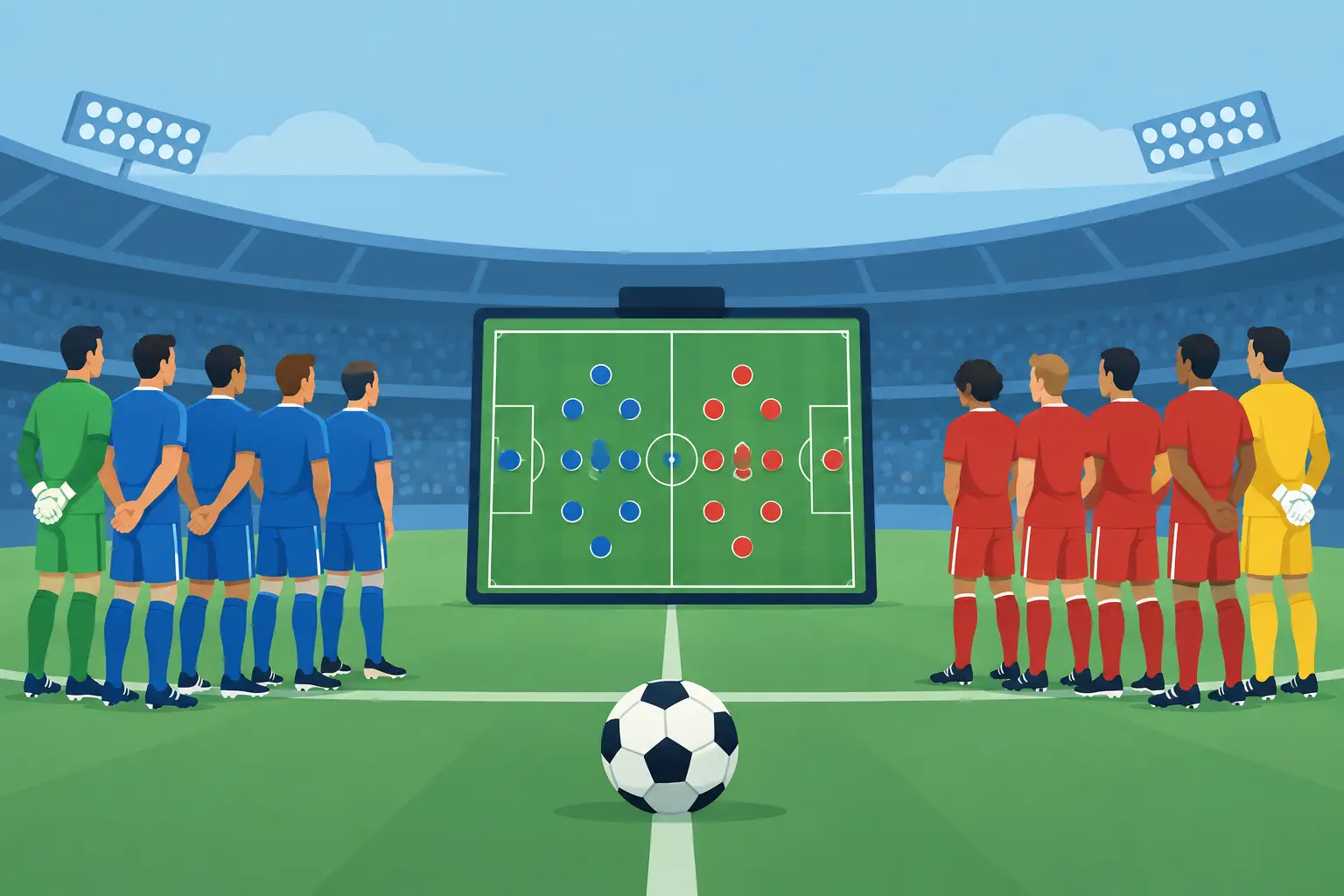
A team sheet can change the feel of a match in seconds. Football match line-ups before kick-off tell you who has won the selection battle, which tactical plan is likely, and whether a late fitness doubt has made it through the warm-up. For supporters, fantasy players and anyone following the action closely, that is match context you want before the first whistle, not halfway through the first half.
The score is still 0-0, but the story is already moving. A missing captain can reshape a defence. A teenager starting up front can signal rotation or a bold tactical call. A familiar 4-3-3 on paper can become a back three once possession begins. Reading the teams quickly helps you watch with a clearer idea of what each side is trying to do.
Why football match line-ups before kick-off matter
The starting XI is the manager's clearest pre-match decision. It reflects form, fitness, opposition analysis, fixture congestion and sometimes plain necessity. In a cup tie, a heavily changed side may show that a league match is the priority. In a title race or relegation battle, the return of one key player can lift a whole team.
Line-ups also put pre-match rumours to bed. A player reported as doubtful may start. Another expected to feature may not even make the bench. That distinction matters. A player among the substitutes may be fit enough for a controlled appearance, while an omission can point to injury, illness, suspension or a selection choice.
For fans following multiple competitions, the team news is a fast way to decide where the real intrigue is. A top-flight fixture with both strongest XIs has one feel. The same fixture with six changes each, especially after European or international travel, has another. Neither is automatically better, but expectations should adjust.
When are starting XIs announced?
For most major domestic and international matches, confirmed teams arrive around one hour before kick-off. Some competitions follow a slightly different schedule, and lower-league, youth and regional fixtures can be less predictable. Treat earlier social posts and predicted XIs as unconfirmed until the official team sheet is released.
The hour before kick-off is busy for a reason. Clubs publish the starting XI and substitutes, broadcasters update their graphics, and live match centres switch from preview mode to confirmed team information. A good live-score page should make that change obvious, so you do not mistake an early projection for a final selection.
Even after the sheet is announced, there can be a late change. If a player is injured during the warm-up, the named substitute can enter the XI before the match starts, subject to competition rules. The original starter usually remains unavailable for the game. These changes are rare, but they are exactly why it pays to check the final confirmed line-up close to kick-off.
Read the team sheet beyond the names
A list of 11 players gives you the basics. The useful part is asking what the combination means. Start with the goalkeeper and defensive unit. Has the manager selected natural full-backs, or centre-backs who may tuck inside? Is there a quick defender chosen to deal with a direct striker? A change at the back can reveal the expected threat before a ball is kicked.
Then look at midfield balance. Two holding midfielders may suggest protection against a stronger opponent, but they can also free the full-backs to attack. One deep midfielder with two advanced players could mean a more aggressive press. Formations help, although they are a starting point rather than a fixed promise. Teams regularly change shape between defending, building from the back and attacking in the final third.
Up front, ask where the goals and width are expected to come from. A recognised striker may give a side a target for crosses and hold-up play. A false nine can create extra space for runners from midfield. If the usual winger is absent, the manager may be planning narrower attacks or asking a full-back to provide the overlap.
The bench deserves attention too. It shows the options available when the plan needs changing. A bench full of attacking players can point to a manager prepared to chase the match. Extra defenders may indicate caution, or simply reflect injuries elsewhere in the squad. Context matters more than a quick judgement.
Absences can be as revealing as selections
Before making assumptions, check why a regular is missing. Suspensions, injuries, international duty and squad rotation do not mean the same thing. A midfielder rested after playing three matches in eight days may be back for the next fixture. A player absent with a hamstring issue presents a different picture.
Sometimes managers leave out a player for tactical reasons rather than physical ones. That can be a response to pace, aerial strength, pressing intensity or the need for a particular set-piece threat. It can also be a message about current form. Avoid treating every omission as a transfer hint or dressing-room drama when a simpler football reason may be right in front of you.
This is where the wider match page earns its place. Recent results, injuries, standings, head-to-head records and previous line-ups add useful perspective. If a side has struggled to protect leads, a more defensive midfield selection makes sense. If an opponent has conceded repeatedly from wide areas, two attacking wide players may be no surprise.
Use line-ups without overreacting
Confirmed team news is valuable, but it is not a prediction machine. A strong XI can still start slowly. A rotated side can play with energy and win comfortably. Individual quality matters, yet chemistry, game state, weather, travel and a single early goal can all change the match.
The smart approach is to use the line-up to sharpen your questions. Who marks the opposition's main threat? Can the selected midfield handle the press? Is there enough pace to attack space behind the defence? Which substitutes could alter the game after 60 minutes? These questions make live football more readable than simply deciding one side should win because a familiar name starts.
For fantasy and betting users, timing is especially important. Wait for confirmed selections where possible, then check for late changes rather than relying on a predicted graphic posted hours earlier. Keep the same discipline with last-minute headlines: a player labelled doubtful may be available, and a supposedly fit player may be rested.
What to check in the final hour
A quick pre-match check should cover the confirmed starting XI, formation listing, substitutes and any late injury update. Compare the team with the previous match, particularly after midweek football or a long trip. Then look for the practical changes: a different set-piece taker, a new captain, a makeshift full-back or a forward returning after injury.
FunkyScore keeps that matchday information close to the live score, alongside fixtures, event updates and match statistics. That means less time moving between cluttered pages and more time seeing what has actually changed before the game begins.
The best line-up reading is simple: trust the confirmed team sheet, add the context around it, and stay open to what the first 10 minutes reveal. Kick-off is not the end of the team news story. It is where the manager's selection finally gets tested.