When Do League Tables Update After a Match?
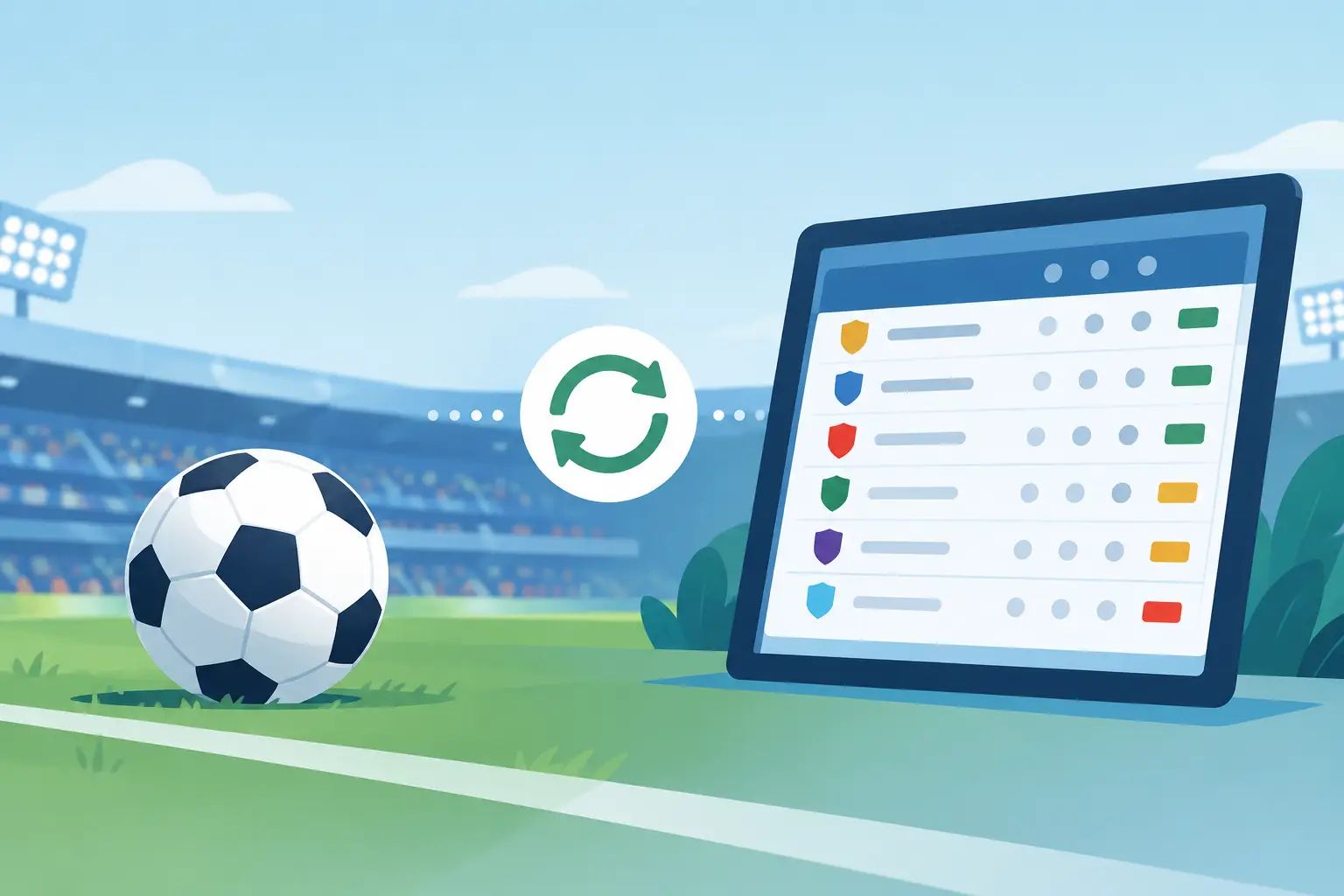
A goal in the 89th minute can change far more than one scoreline. It can move a club out of the relegation zone, put rivals top, or swing a title race on goal difference. So, when do league tables update? Usually within seconds of a key event or the final whistle on a live-score platform, but the official position can take longer when a match has been abandoned, reviewed or subject to a disciplinary decision.
For supporters, the practical answer is simple: live tables react quickly, while final standings are only truly settled when the competition confirms them. Here is what happens between the goal, the whistle and the table you see on screen.
When do league tables update during a match?
Most live football tables update as soon as the match data changes. If a side scores, concedes, receives a result-changing red card only indirectly through the match outcome, or reaches full time, the standings can refresh automatically. The table recalculates the essentials: matches played, points, goals scored, goals conceded, goal difference and league position.
That is why a live table is so useful on a busy Saturday. You do not need to work out whether a draw is enough, whether a rival has gone above your club, or how a late goal affects the bottom three. The numbers move with the action.
There is one catch: an in-play table is provisional. It shows the standings based on the scores at that moment, not the final state of the competition. A side might be top for six minutes, then drop to third when a goal goes in elsewhere. In leagues where clubs have played different numbers of matches, the picture can be even less settled.
Why the table can change before full time
A live league position is calculated from the current score in every relevant fixture. If three clubs are level on points, one goal can alter goal difference, goals scored or a head-to-head situation depending on the competition rules.
For example, a club winning 1-0 may be above a rival on goal difference. If that rival scores twice late on in another match, the order can reverse without either club changing points total. The standings are not waiting for the final whistle to do the maths.
This matters most on the final day, but it applies all season. Promotion races, European qualification places and survival battles often turn on fine margins long before May.
What happens after the final whistle?
Once a match finishes, live data feeds usually update the result and table within moments. The score is marked as full time, the points are allocated, and the live standings become the completed version for that round of fixtures.
In normal circumstances, that is the table fans should expect to see immediately after the game. However, football has plenty of exceptions. The result may still be subject to correction if an event was recorded incorrectly, if a referee's report leads to action, or if the competition later rules that the match result cannot stand.
A scoreboard is built for speed, so it will reflect the confirmed match status supplied at the time. The league or governing body remains the authority on official rulings. That distinction matters when the stakes are high.
Why are league tables sometimes delayed or different?
If you see a table that looks wrong, it is usually because the competition has a rule or situation that does not fit a standard full-time update. These are the most common reasons.
Postponed and abandoned matches
A postponed fixture does not add points, goals or a match played to either side. One club may therefore sit lower despite having games in hand. The table will update when the rearranged match is played, not on the original fixture date.
An abandoned match is more complicated. If a game stops because of weather, crowd trouble, a medical emergency or another serious incident, the league must decide what happens next. It could order a replay, resume from the minute the match stopped, allow the result to stand, or award a result. Until that decision is confirmed, standings may remain unchanged or show a temporary status.
Points deductions and appeals
Points deductions can transform a table without a ball being kicked. Financial breaches, registration issues, fielding an ineligible player or other rule violations may lead to a sanction. When the sanction is applied, the club's points total and position update.
But that may not be the end of it. A club can appeal, and an appeal can reduce, remove or increase the deduction. This is why it is sensible to check whether a table includes a note such as “points deducted” or “appeal pending”. A live table can show the current ruling accurately while the final legal outcome remains unresolved.
Corrections to match data
Occasionally, a goal is credited to a different player after review, or an own goal is recorded. That usually affects scorer charts rather than the league table, because the score itself has not changed. A corrected scoreline, though rare, can alter goal difference and positions.
Data providers also reconcile match events after full time. If your table and a broadcaster's graphic briefly differ, the most likely explanation is timing or a correction being processed, not a different set of league rules.
How tiebreakers decide who is above whom
Points come first in most league tables, but teams level on points need a tiebreaker. Goal difference is common in English football: goals scored minus goals conceded. If that is level too, goals scored often decides the order.
Not every competition works that way. Some leagues use head-to-head records before overall goal difference. Others have separate rules for title, promotion or relegation places, including a play-off or a deciding match. European group stages can use a detailed sequence of head-to-head criteria, disciplinary records and coefficient-related rules.
That is why tables need to be read in the context of the competition. Two clubs can have the same points, goal difference and goals scored but still be ranked differently under that league's regulations. The on-screen order follows the applicable rules, not just a simple points-and-goals calculation.
Live table, official table: which should you trust?
Use the live table for the matchday picture. It is the fastest way to follow what a goal means right now, especially when several fixtures are under way. For a settled historical record or a decision involving a sanction, rely on the competition's confirmed ruling.
The two will match almost all of the time. The gap only appears in unusual cases: abandoned games, pending appeals, administrative awards and later corrections. Treat a live table as the best available view of the action, rather than a substitute for a disciplinary panel.
On FunkyScore, standings are designed to keep the matchday question clear: where does this result put my club now? Check the match status first, then compare matches played and goal difference before drawing a conclusion. A team in 12th with two games in hand may be in a stronger position than the number suggests.
Why tables can look odd early in the season
In August and September, league positions can be misleading. One side may have played three home matches, another may have faced two promoted clubs, and a third may already have a fixture postponed. The table is accurate, but it is not yet balanced.
The same applies after international breaks, cup weekends and bad weather. Clubs can have uneven fixture lists for weeks. Points per game may offer extra context, but it is not usually the official ranking method. The actual table is based on the matches that have been completed and recognised by the competition.
For fans tracking a promotion push or relegation scrap, look beyond the position. Check points, games played, goal difference, upcoming fixtures and the results of direct rivals. The table updates quickly; understanding it takes one extra glance.
Quick answers on league table updates
Does a table update at half time?
Yes, live standings can update during the first half and at half time if current scores affect positions. The table remains provisional until every relevant fixture is finished.
Do red cards change the league table?
Not directly. A red card affects the match and may lead to suspensions, but the table only changes if the score or final result changes, or if a later disciplinary decision includes a points sanction.
Why has my club not moved after winning?
Your club may still be behind on points, goal difference or another competition tiebreaker. It may also have fewer matches played than teams around it, or another live result may be keeping the order unchanged.
The best time to watch a league table is not only after the whistle. Keep it open while the goals are flying, then check the completed standings once the day’s final result is in. Football moves fast, and sometimes the difference between first and fourth is one touch in a match happening hundreds of miles away.