What Does Extra Time Mean in Football Matches?
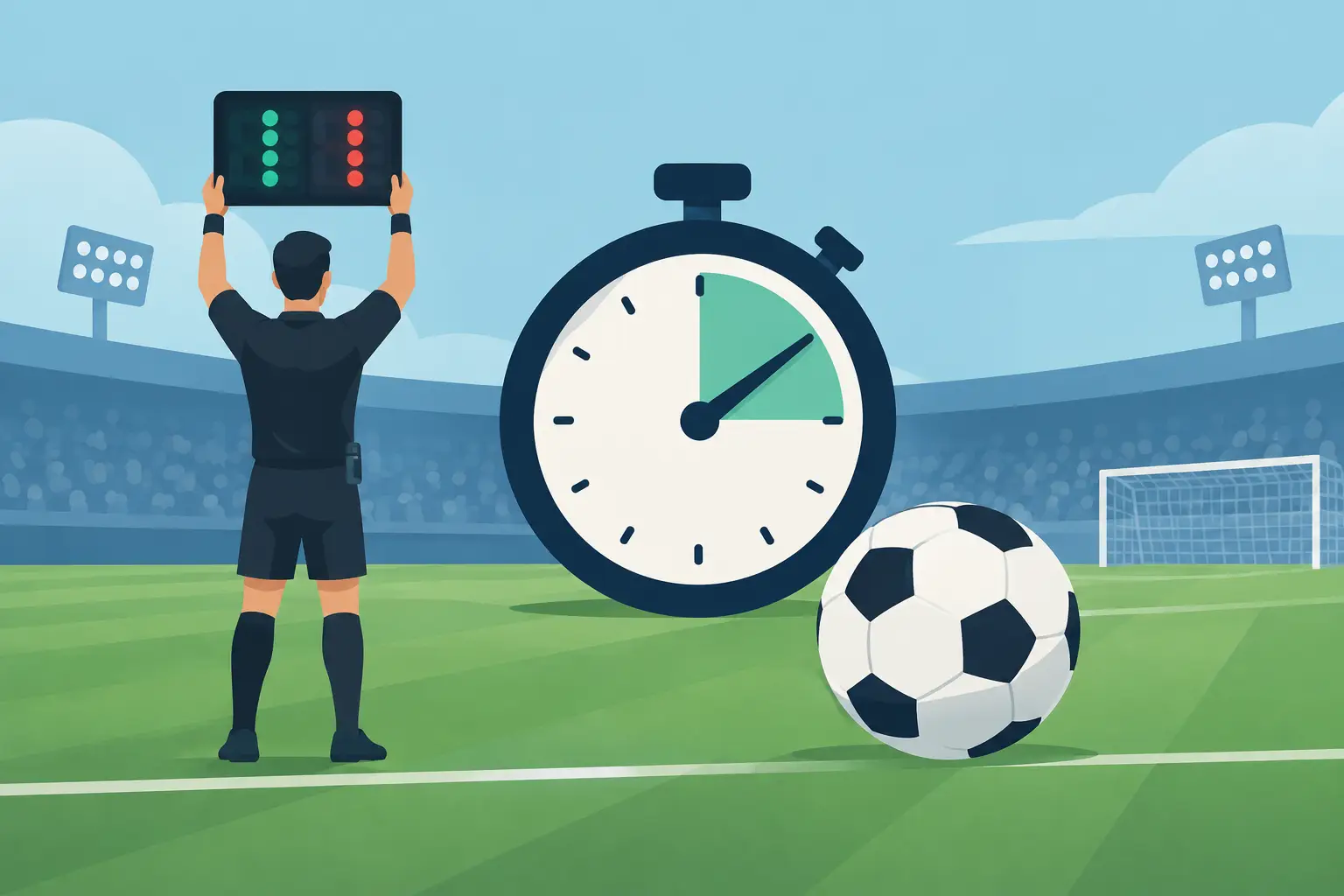
A knockout match finishes 1-1 after 90 minutes, but nobody is leaving the ground just yet. The score stays live, the teams regroup, and the match enters a new phase: extra time. If you have ever wondered what does extra time mean on a football scorecard, it is the additional 30 minutes played to find a winner when a match cannot end in a draw.
It sounds simple, but extra time is often confused with stoppage time, injury time and penalties. They are not the same thing. Knowing the difference helps you read a live match status properly, follow betting or fantasy decisions, and understand why a goal may count in a player’s match record but not their league tally.
What does extra time mean in football?
Extra time is an extra 30 minutes of football played after the usual 90 minutes when a competition needs one team to progress. It is split into two 15-minute periods, with a short interval between them. The match does not restart from 0-0: the score at the end of normal time carries over.
For example, if a cup tie is 1-1 after 90 minutes and one side scores twice in extra time, the final score is 3-1 after extra time. On live score services, you may see the status shown as ET, AET or a minute beyond 90, such as 105' or 120'.
Extra time is mainly used in knockout football. League matches almost always finish after 90 minutes, even when the points are shared. A draw is a valid result in league tables. In a cup, play-off or tournament knockout round, a draw may not settle anything.
When is extra time used?
The competition rules decide whether extra time is played. There is no single rule that covers every football match.
In many major cup competitions, a tied match after 90 minutes goes to extra time and then, if needed, a penalty shoot-out. This is common in later rounds of domestic cups, European knockout ties and international tournaments. But some competitions skip extra time entirely and go straight to penalties, particularly in earlier cup rounds or certain two-legged ties.
Two-legged fixtures add another layer. The score that matters may be the aggregate score across both matches, not just the score on the night. If the aggregate score is level after the second leg, the rules might call for extra time. Away goals are no longer used in UEFA men’s club competitions, so a level aggregate score can now lead directly to extra time where competition regulations allow it.
That is why the match screen matters. A 0-0 draw may look routine at first glance, but the aggregate line, round and status tell you whether the teams are heading for extra time, penalties or the final whistle.
Extra time is not stoppage time
Stoppage time, often called injury time or added time, is the time added to the end of each half to make up for delays. Substitutions, injuries, goals, VAR checks and time-wasting can all increase it. A match might show 90+6', but it is still in normal time.
Extra time begins only after the full 90 minutes have been completed and the match remains unresolved under the competition rules. It has its own first half and second half, and each can also have stoppage time added.
So a goal at 90+4' is a normal-time goal. A goal at 105+2' is an extra-time goal. That distinction is useful when checking a timeline, a scorer record or a match report.
How the 30 minutes work
Extra time starts with the teams changing ends or restarting according to the referee’s procedure. They play 15 minutes, take a brief break, then play another 15 minutes. There is no full half-time interval and no lengthy team talk built into the laws.
The clock does not stop for every interruption, so added time can still be played at the end of either extra-time period. In practice, a match can run beyond 120 minutes. If there are lengthy VAR checks, injuries or delays before a decisive set piece, the final whistle may come at 121', 123' or later.
The demands are obvious. Players have already completed 90 minutes at match intensity, often after a packed fixture schedule. Fatigue changes everything: pressing drops, spaces open up, and concentration can decide a tie. A fresh substitute can transform a match, while an exhausted defender may struggle against one direct run.
Managers also have to think beyond the next attack. Depending on the competition, they may have an additional substitution available in extra time. They must balance chasing a winning goal against keeping reliable penalty takers on the pitch if a shoot-out is looming.
Does a goal end extra time early?
No. Modern football uses the full extra-time format. If a team scores in the first period, the other team still has time to respond before the interval and throughout the second period.
Older competitions sometimes used the golden goal rule, where the first goal in extra time ended the match immediately. Silver goal, a shorter-lived variation, also existed. Neither is part of the standard format now. When you see an extra-time goal, expect the match to continue until the referee ends the relevant period, unless the final whistle follows naturally.
What happens if the score is still level?
If neither team is ahead after extra time, the usual next step is a penalty shoot-out. This decides the winner, but it is not considered part of the match score in the same way as goals scored during play.
A final result may be displayed as 1-1 after extra time, with one side winning 5-4 on penalties. The match score remains 1-1 for most statistical purposes. The shoot-out outcome tells you which team progressed.
Each side takes five penalties initially, alternating kicks. If the score is still level after five each, the shoot-out moves to sudden death: one team scores while the other misses, and the tie is decided. Goalkeepers can become heroes, but the shoot-out also tests the players who have spent up to two hours running, tackling and managing pressure.
Some competitions have different procedures, especially in youth football or lower-level cups. Always check the competition format rather than assuming extra time and penalties will follow every draw.
How extra time appears in live scores and statistics
On a live football scoreboard, the status tells the story quickly. HT means half-time, FT means full-time after normal time, ET means extra time is being played, and AET means after extra time. A separate penalty indicator may appear once the shoot-out begins or after it is complete.
The event timeline is where the detail becomes clear. Goals, substitutions, cards and VAR decisions should carry their match minute, including 90+ and 105+ notation. This matters because an event at 118' happened in extra time, while an event at 89' did not.
For player statistics, goals scored in extra time generally count as goals in that match and in the relevant cup competition. They do not turn a league fixture into a 120-minute match, because extra time is not used there. For betting, fantasy and record-keeping, rules can differ by operator or game, particularly around whether a market includes extra time or penalties. Read the market wording before relying on a score after 90 minutes.
FunkyScore match coverage makes this easier to follow by pairing the live score with the match status, event timeline and competition context. You can see whether a late goal has forced extra time or whether a knockout tie has moved on to penalties without hunting through match reports.
Why extra time changes the match
Extra time is not just 30 more minutes on the clock. It changes the risk calculation. A team protecting a narrow lead may sit deeper, while the side chasing the game commits more players forward. Set pieces become even more dangerous, and a single lapse can outweigh an hour of controlled football.
There is also a trade-off in tactical ambition. Go all out for a winner and you may leave space for a counter-attack. Settle for penalties and you may waste the chance to exploit tired opponents. The better choice depends on the squad, the scoreline, injuries, available substitutes and confidence of the likely penalty takers.
When a match reaches extra time, keep an eye on the live status rather than the original kick-off format. The extra 30 minutes can produce the goal that sends a club through, the save that changes a season, or the shoot-out nobody wanted but every fan will remember.